
Guide
Why builders' dust keeps coming back, and how to get rid of it
Plaster and sanding dust is fine enough to hang in the air and settle slowly, so a room you wiped in the evening has a grey film again by morning. Wait until every trade has finished, let the dust settle, clean from the top of the room down with damp cloths and a filtered vacuum, and expect a lighter second pass a week later.
Why the dust keeps coming back
Sanding filler, cutting plasterboard and chasing walls for cables all make dust much finer than the grit you sweep off a kitchen floor. The finest of it stays in the air long after the work stops, then settles again. Every time someone walks through, opens a door or runs a fan, some of it lifts and drifts into the next room.
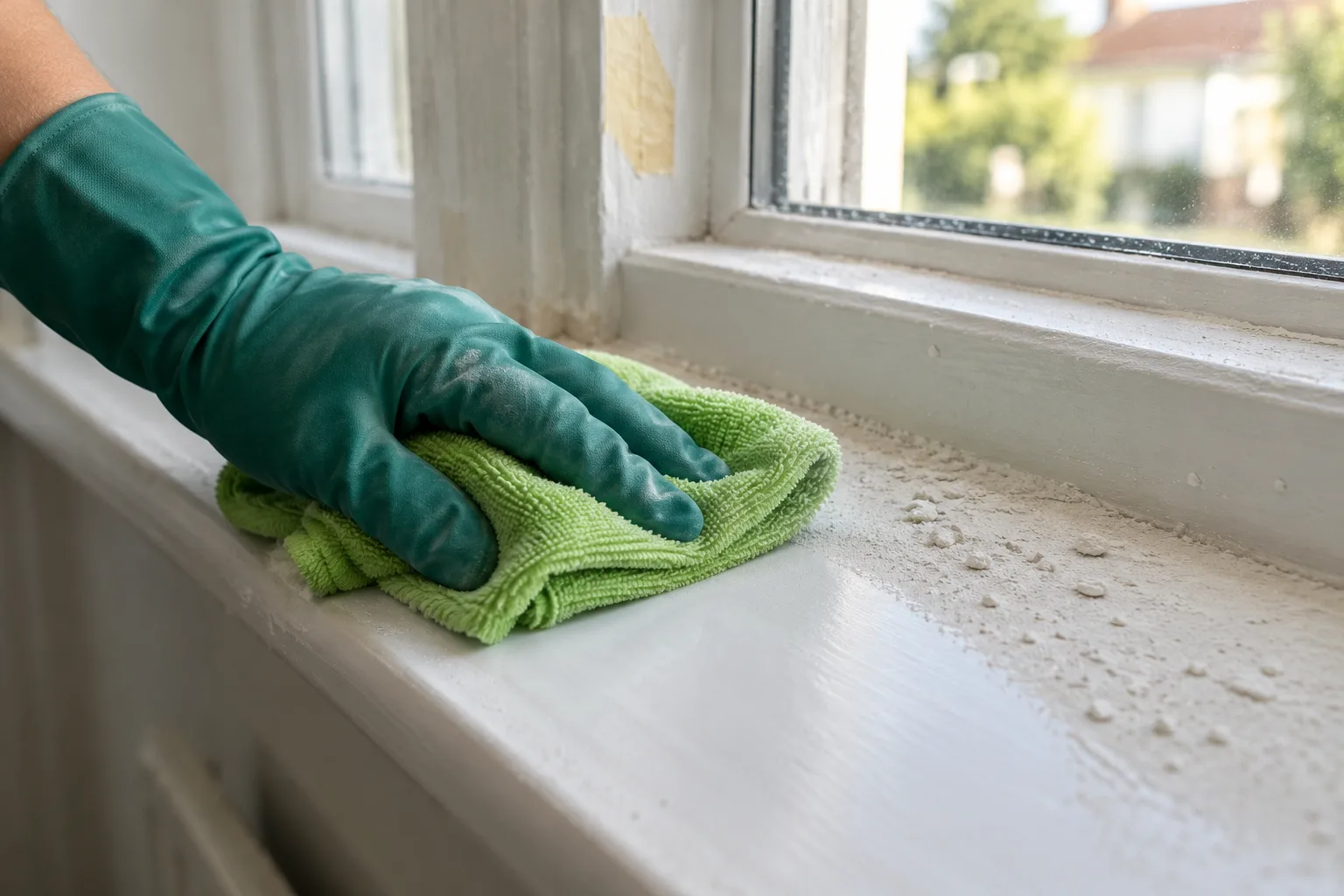
It settles on every flat surface: skirting boards, the tops of doors and frames, window sills, light fittings, inside cupboards that were left open, radiator fins and the slats of blinds. It also gets into soft things, such as curtains, sofas and carpets, and comes back out of them for days.
That's why a single quick clean rarely looks finished the next morning. The job is to remove as much as possible without stirring it back up, and to clean in the right order.
When to book the clean
After the last trade leaves
Wait until the decorator's final coat, the flooring and the snagging are done. Every visit after the clean brings new dust with it.
Once the dust has settled
Leave the rooms closed for a day if you can, so the dust in the air comes down before anyone wipes it up.
Before the furniture goes back
An empty room is far quicker to clean, and dust isn't trapped under sofas and beds or in curtains.
With the power and water on
The cleaner needs running water, hot water, electricity and lights.
cleand cleans can be booked from tomorrow, at least 12 hours ahead, so you can book as soon as you know the date the builders finish.
What to clear before the cleaner arrives
An after builders clean removes dust and light debris. It isn't a clear-up of the building work itself, so these need to be done first, usually by the builders:
- Rubble, offcuts, bags of waste and empty tins, and the skip if there is one.
- Paint, plaster and cement splashes on floors, glass and fittings. These need scraping or specialist removers, and are part of the decorator's or builder's finish.
- Tools, ladders and spare materials.
- Floor protection and dust sheets, lifted carefully by folding the edges inwards so the dust stays inside.
Loose floorboards, exposed wiring, missing handrails or wet paint all go in your booking notes. The cleaner works from the floor or a small step ladder, so high windows and stairwells above that height are left alone.
How to clean it yourself
If you are doing it yourself, the order you clean in makes more difference than the products you use.
- Open the windows and wear an FFP3 dust mask. If you can, hire an M-class dust extractor rather than using a household vacuum, whose filter clogs fast. Turn off any fans that move air between rooms.
- Vacuum before you wipe, with a vacuum that has a good filter. Fine plaster dust clogs an ordinary household vacuum fast, so empty it and clean the filter often.
- Work from the top of the room down: light fittings, tops of doors and frames, then walls if they are dusty, then sills and radiators, then skirting boards.
- Wipe with damp, well wrung-out microfibre cloths, not dry dusters, which push fine dust back into the air. Rinse the cloths often.
- Do inside cupboards and drawers, which fill with dust even when they were shut.
- Vacuum the floor again last, then mop hard floors with clean water, changing it as soon as it turns grey.
Expect a lighter second clean a week or so later, once the dust that worked its way into carpets, curtains and vents has come out again. Running the extractor fans and keeping windows open in between helps.
What an after builders clean costs
A cleand after builders clean is £30 an hour, including VAT, for the hours we recommend. For a two-bedroom, one-bathroom home that is 6 hours, which comes to £180. Housekeep's median fixed price for the same size of home is £284.
It takes longer than a deep clean of the same home because dust has to come off every surface, inside cupboards as well as out. The cleaner removes dust and light debris from surfaces, floors, skirting boards, doors, window sills and fittings.
If only one room was worked on, a one-off deep clean with extra hours is often enough. Put the room that had the work first in your booking notes.
Questions people ask
After the last trade has finished and the dust has had a day to settle. Cleaning while work is still going on just means doing it again.
Fine plaster dust stays in the air and works out of carpets, curtains and vents for days. A second, lighter clean about a week later usually clears what is left.
No. Paint, plaster and cement splashes need scraping or specialist removers and are usually part of the decorator's or builder's finish. The clean removes dust and light debris.
You can, but fine plaster dust clogs a household vacuum's filter quickly. Empty it and clean the filter often, and vacuum before you wipe.
With cleand, £30 an hour for the hours we recommend: £180 for a two-bedroom, one-bathroom home in normal condition, including VAT.
See the price for your home
When the builders have gone, get a fixed price for an after builders clean from your postcode.